Photo ID Verification: How It Works and Why You Need It

Incode
June 2, 2022
June 2, 2022
Photo ID verification has long been used in retail, but the rise of eCommerce has made it an increasingly important tool for digital security. Knowing how to verify photo IDs online can help your organization strengthen your Anti-Money Laundering (AML) and Know Your Customer (KYC) procedures.
Here we’ll cover what you need to know about ID verification photo technology and its benefits. First, we’ll explain photo ID verification and how it fits into AML and KYC procedures. Then we’ll look at how the technology works, illustrating the process of a photo ID verification example. Finally, we’ll identify the benefits of photo ID verification and share how your organization can begin integrating these benefits into your existing processes through automation.
Photo ID verification is an identity authentication procedure used to verify that a photograph presented as an identifying credential is legitimate and belongs to the individual submitting it. To confirm a photo ID given is a genuine identity document, verification procedures may include checks for items such as security features, watermarks, and signs of tampering.
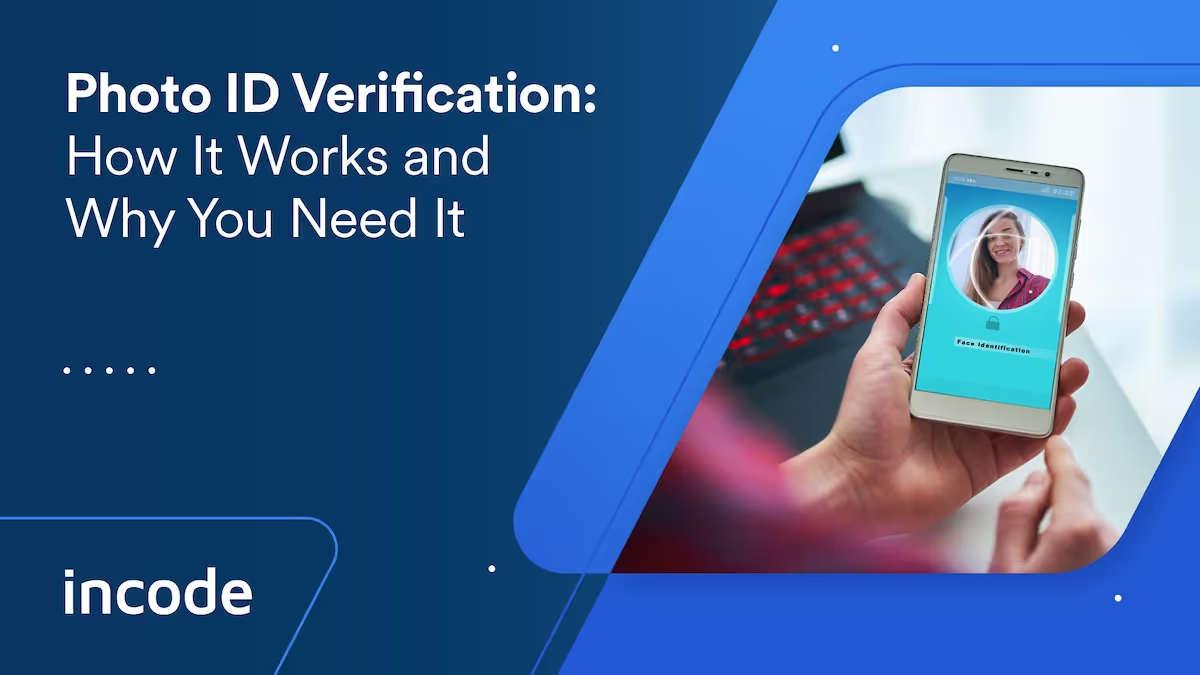
Verification procedures may include visual comparisons of the individual with the photo to confirm an individual presenting a photo ID is its legitimate owner. Such comparisons may be made in person or online via computer analysis of live selfies. When a live selfie is used, the process often is called real-time photo ID verification. In this article, we’ll focus on real-time photo ID verification, which has grown increasingly important as a vital tool for digital security.
A photo ID is a document with a photograph issued to establish the identity of the document holder. For most photo IDs, the picture focuses on the person’s face as seen from a frontal perspective, although other angles and identifying features may be used in specific contexts. For example, ear shape can be used as a biometric identifying feature in photos taken from a profile view.
Most photographs on photo IDs include accompanying text, such as the person’s name or the name of the issuing party. AML and KYC checks include scanning ID text and comparing textual data with information from online databases, strengthening photo ID authentication by incorporating additional verification methods. Parties issuing photo IDs may include government agencies, businesses, and other organizations.
Common types of photo IDs include identification documents such as:
Official government-issued ID cards are typically preferred for photo ID. During the photo verification process, photo IDs may be checked against databases of less official photo IDs, such as photos used in social media profiles, as a secondary cross-referencing measure. Additionally, live selfie photos check for a match between individuals presenting photo IDs and genuine ID cardholders.
Photo ID verification enters into AML and KYC compliance procedures in two main ways:
In both these ways, photo ID verification makes AML and KYC procedures more robust by supplementing other identity authentication methods. Photo ID verification typically accompanies other identity authentication methods, such as verification of a customer’s Social Security number, address, email, or further identifying details.
In a physical context, photo ID verification is done manually by visually comparing the individual presenting the ID with their photograph. In a digital context, online real-time photo ID verification occurs during customer onboarding or transaction monitoring and involves several steps:
For accuracy and efficiency, verification of ID photos and selfies is performed by automated tools. For example, a driver’s license may be analyzed digitally by a photo ID verification API to confirm the presence of security features that distinguish a real ID from a fake one. Similarly, Artificial Intelligence may analyze a selfie to verify that the image represents a three-dimensional person rather than an impersonator holding a flat picture to a camera.
Real-time photo ID verification offers several advantages to both organizations and their customers:
These benefits make photo ID verification highly advantageous for businesses obligated by law or prudence to verify customer identities, such as banks, travel and hospitality providers, eCommerce retailers, and live event organizers.
Photo ID verification strengthens your AML and KYC verification processes by letting you authenticate photos new customers present online. This improves your organization’s compliance while protecting your customers from impersonators.
The most efficient way to begin incorporating photo ID verification into your onboarding process is to adopt an automation platform that lets you integrate photo authentication technology with your existing procedures and software. The Incode Omni platform includes features that make it easy for developers to incorporate photo ID verification with the apps you’re already using. Request a demo to see how Incode Omni can help you begin enjoying the benefits of photo ID authentication.
%20(1).avif)