

Education
Trusted identity for applicants, students, faculty, and staff
Incode verifies a real, live person at enrollment, then re-proves them at every password and MFA reset. The same check that catches a ghost student applying for aid catches an impersonator calling the help desk.
We secure identities across education worldwide
AI identity verification and financial-aid fraud prevention, proven where fraud pressure is highest.
What education institutions are up against
A new era of fraud for education
A sector that once saw little fraud is now a constant target, from enrollment to the IT help desk. The US Department of Education flagged roughly 300K suspicious FAFSA applications in 2025 and blocked more than $1B in fraudulent aid disbursements as a result.
Ghost students and aid fraud
Bots and fraud rings enroll, collect the aid refund, and disappear. One state system flagged 31.4% of applications as fraudulent. (Inside Higher Ed, 2025)
Help-desk account takeover
Attackers talk the IT help desk into resetting a password or MFA device. Knowledge-based questions are easy to socially engineer.
Forged and AI-generated IDs
Synthetic applicants and AI-generated identity documents pass checks built for paper, and verification comes too late or not at all.
Exam impersonation
Proxy test-takers, mid-exam handoffs, and deepfake camera injection defeat the check at the start of a proctored session.
Incode solutions
Built for education
Coverage across the full campus lifecycle, from the first application to every reset, exam, and re-enrollment that follows.
Identity Verification
Document, biometric, and liveness checks that verify real students at enrollment and before aid is released.
Learn moreAccount takeover protection
Biometric re-proof at password, MFA, and help-desk resets, not a security question an attacker can research.
Learn moreDeepfake detection
Deepsight stops deepfakes, injection attacks, and synthetic media across remote enrollment and exams.
Learn moreFraud-ring detection
Collaborative cross-network intelligence catches duplicate applicants and fraud rings across institutions.
Learn more99%
fraud reduction
99%
age impersonation detection
11x
faster onboarding
User experience
How it works
One identity for every campus moment, verified in real time.
Why institutions choose Incode
Independent layers of defense for every campus identity
Fraud that adapts will eventually fool any single check. Incode verifies every identity across independent layers, each reading a different signal, in milliseconds. Real students pass without friction while fraud has to beat every layer at once.
Document verification
AI-powered detection of paper forgeries, screen spoofs, and digitally generated IDs. International identity documents supported.
See it in actionBiometric liveness
Liveness detection confirms a live person is present and matches the face to the document in milliseconds.
See it in actionAI-generated document detection
Deepsight for Documents catches forged, tampered, and fully synthetic IDs, fraud that template checks and barcode validation were never built to see. 8.8x more fraud caught than document checks alone.
See it in actionRe-proof at the help desk
The real person is re-proven at password, MFA, and Duo resets. A socially engineered answer no longer opens an account.
See it in actionCross-institution fraud signals
Our collaborative intelligence solution links applicants across Incode's network, catching duplicate identities, fraud rings, and ghost-student patterns.
See it in actionPrivacy is the architecture
We made privacy a founding conviction long before regulation or the market asked for it. Incode's AI-first identity verification reduces fraud while remaining private and compliant.
Read the ManifestoCase study
A US community college screens its 50K applicant admissions funnel with standalone Incode verification, no integration into college or state systems required, cutting fraudulent application attempts by 88% in one year. (customer-reported on a joint public webinar)
US Community College · Higher education · United States


FAQ
Common questions about identity verification for education
Still have questions? Talk to an expertHow does Incode stop ghost-student and financial-aid fraud?
Ghost students are bots or fraud rings that enroll, collect the aid refund after tuition, and disappear. Incode proves a real, live, unique person at application and enrollment before aid is released: liveness defeats bots and stolen photos, and cross-network de-duplication flags rings and repeat applicants across institutions.
Does Incode meet the Department of Education's identity verification requirement?
Yes. The Department of Education requires high-risk aid applicants to present an unexpired government photo ID via a live camera check, and recognizes third-party verification at NIST Identity Assurance Level 2. Incode provides both.
How does Incode protect the IT help desk from account takeover?
Help-desk vishing works by talking an agent into resetting a password or MFA device with researched answers. Incode replaces knowledge-based questions with a biometric check at password, MFA, and Duo resets, for students, faculty, and staff, and plugs into Okta, Microsoft Entra, SailPoint, and Duo.
Does identity verification add friction for real students?
No. Verification is a passive, sub-second selfie plus a document scan, in the browser with no app to install. Risk-based screening means only higher-risk applicants get the heavier check.
Can Incode verify the person taking a remote exam?
Yes. It confirms the test-taker matches the enrolled student and can re-authenticate during the session, with liveness and Deepsight defeating proxy test-takers and deepfakes.
How does identity verification fit FERPA?
FERPA requires institutions to use reasonable methods to authenticate identity before disclosing student records. Strong identity verification supports that requirement, and Incode handles verification data with privacy controls and data segregation.
Resources
Resources on education

How privacy-preserving fraud detection works inside TrustGraph
See how TrustGraph uses secure multi-party computation to flag repeat fraud across institutions, with customer data staying where it lives.
Read more
Incode launches TrustGraph, the first trust network built for the agentic era
TrustGraph is the first biometric-anchored, privacy-preserving trust network built for the agentic era, enabling financial institutions, marketplaces, and AI companies to detect repeat fraud and agentic fraud.
Read more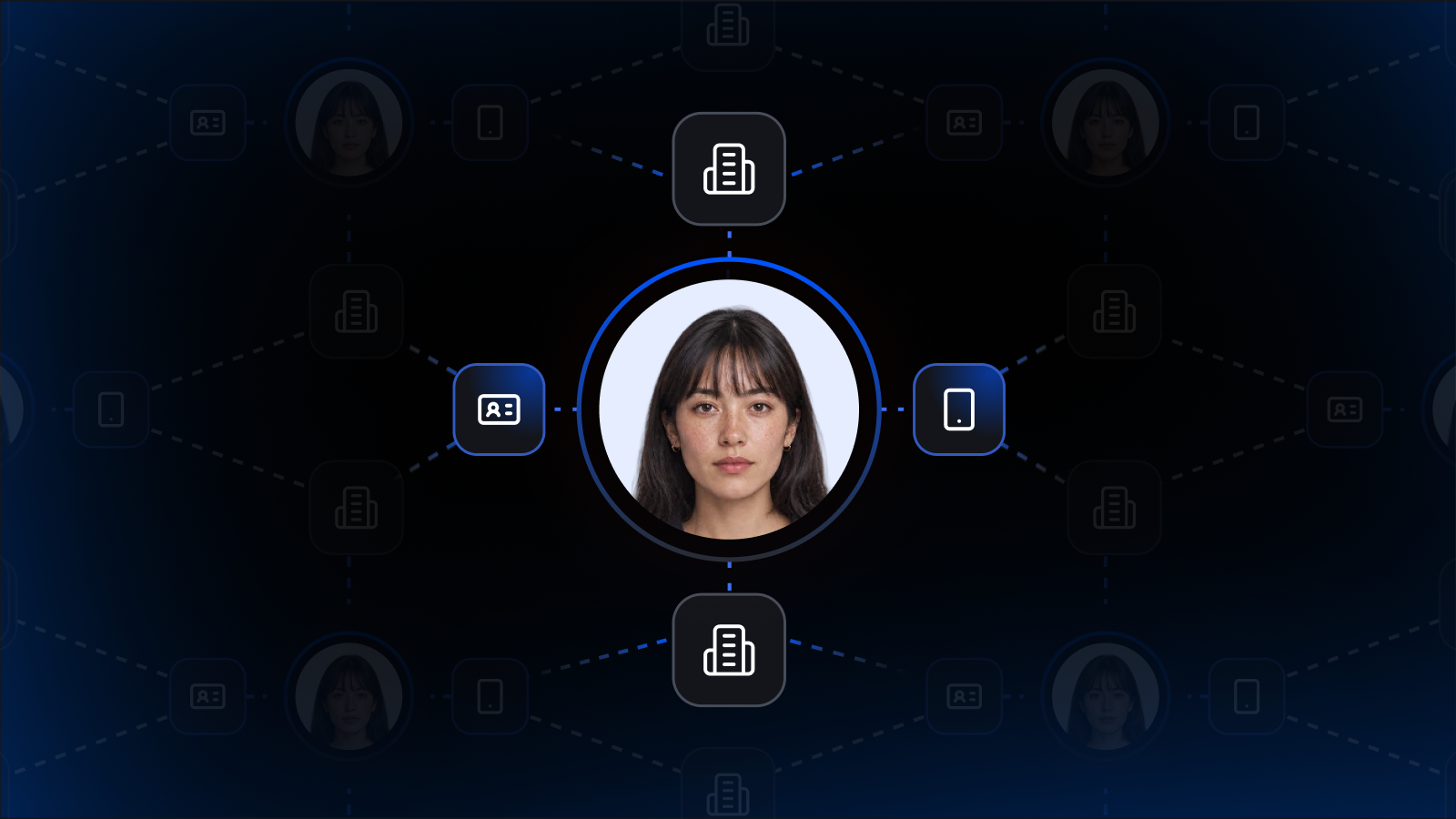
Introducing TrustGraph, the first trust network built for the agentic era
TrustGraph is a privacy-preserving trust network for repeat fraud detection. In early access, institutions detected up to 53% more fraud.
Read more