Every document, every script
Thousands of ID designs across 190+ countries, with complex fonts, diacritics, symbols, and different reading directions. General models never see enough of them to learn.
 Highlights
 Introducing TrustGraph
The first trust network built for the agentic era
Read more
Introducing TrustGraph
The first trust network built for the agentic era
Read more
 Age Center
Understand Incode’s approach to age assurance
Explore the Center
Age Center
Understand Incode’s approach to age assurance
Explore the Center
 Introducing GovFaceMatch
The first identity solution to match biometrics against DMV records
Read more
Introducing GovFaceMatch
The first identity solution to match biometrics against DMV records
Read more
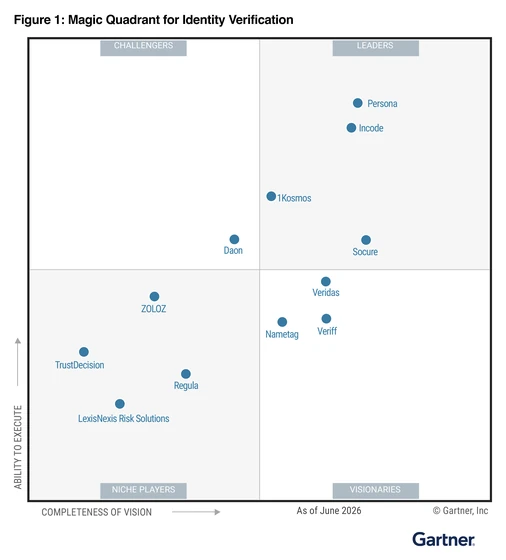 3 years in a row named a Leader
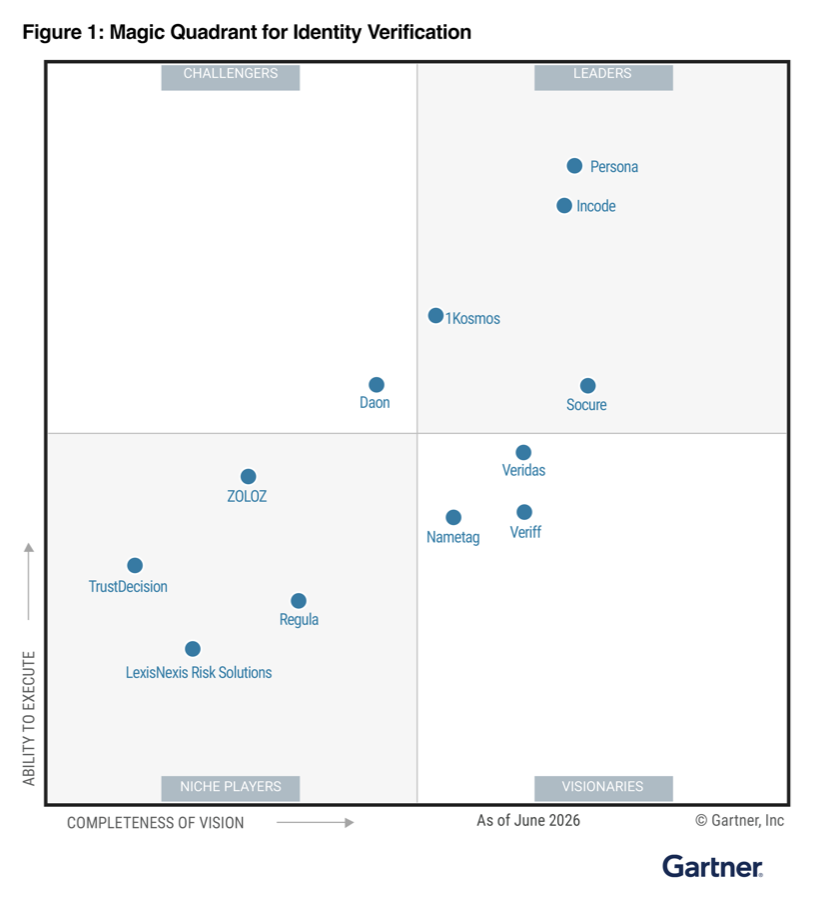
A Leader in the 2026 Gartner® Magic Quadrant™ for Identity Verification
Download the report
3 years in a row named a Leader
A Leader in the 2026 Gartner® Magic Quadrant™ for Identity Verification
Download the report
The problem
Off-the-shelf OCR is trained on clean, printed text. Identity documents are the opposite: hundreds of layouts, dozens of scripts, security fonts, and photos taken in the real world.
Thousands of ID designs across 190+ countries, with complex fonts, diacritics, symbols, and different reading directions. General models never see enough of them to learn.
Glare, blur, low light, tears, and odd angles wreck accuracy for tools tuned to flatbed scans and clean screenshots.
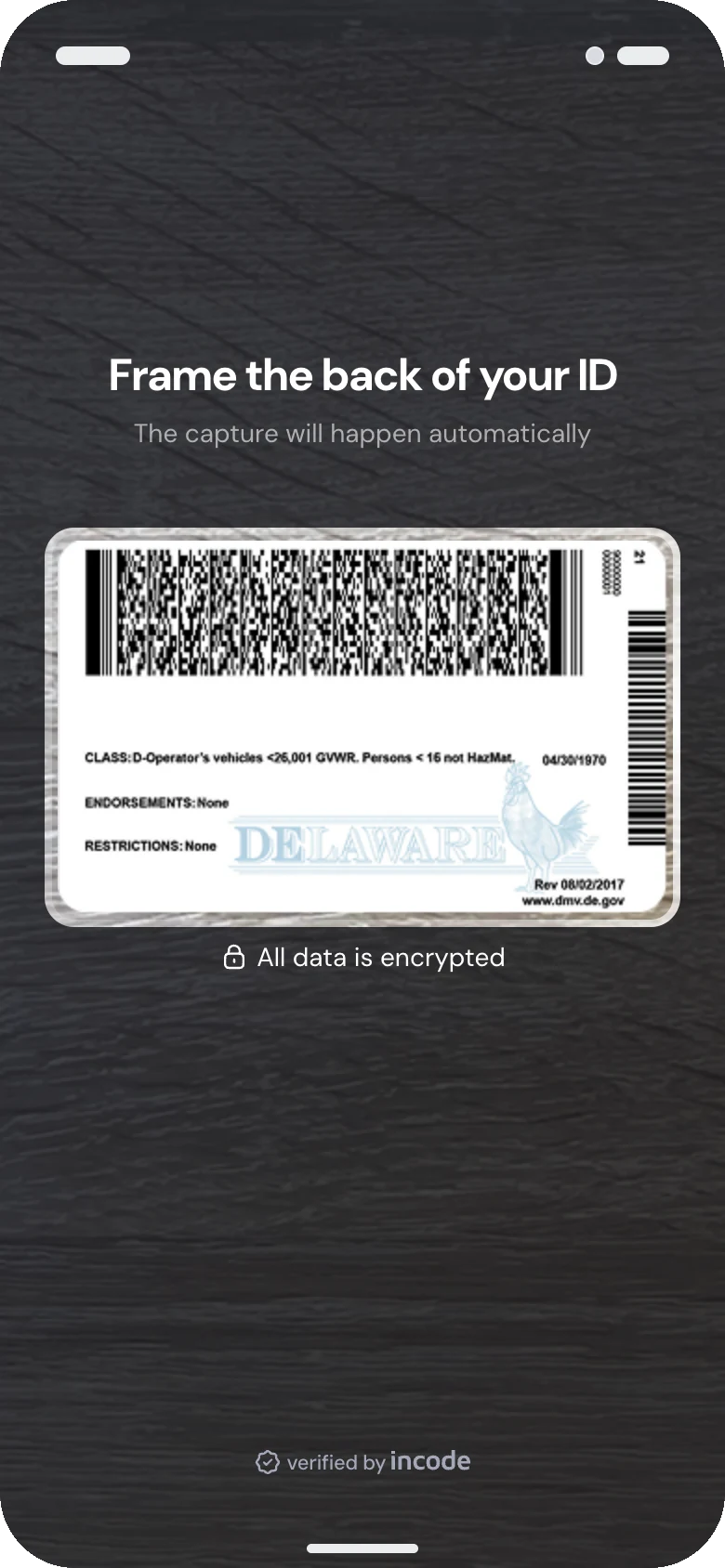
Security fonts, diacritics, special symbols, PDF417 barcodes, and machine-readable zones trip up OCR that isn't trained for them.
complex fonts, diacritics, and reading directions, read by one model
OCR pipeline with no third-party engine to wait on
How it works
Every document runs through Incode's full OCR toolkit: captured, classified, read, decoded, and returned as clean, structured fields.
The output
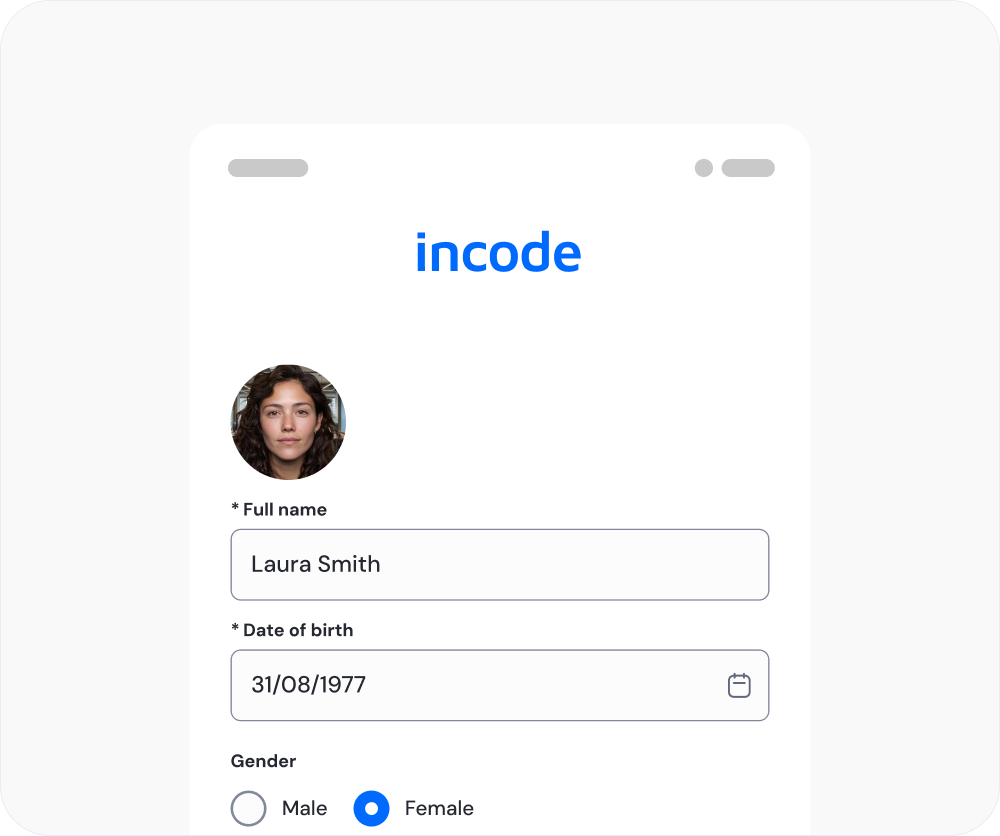
Every read returns as structured fields your systems can use, each scored for confidence, with the MRZ and barcode decoded and matched against the print.
Smart capture
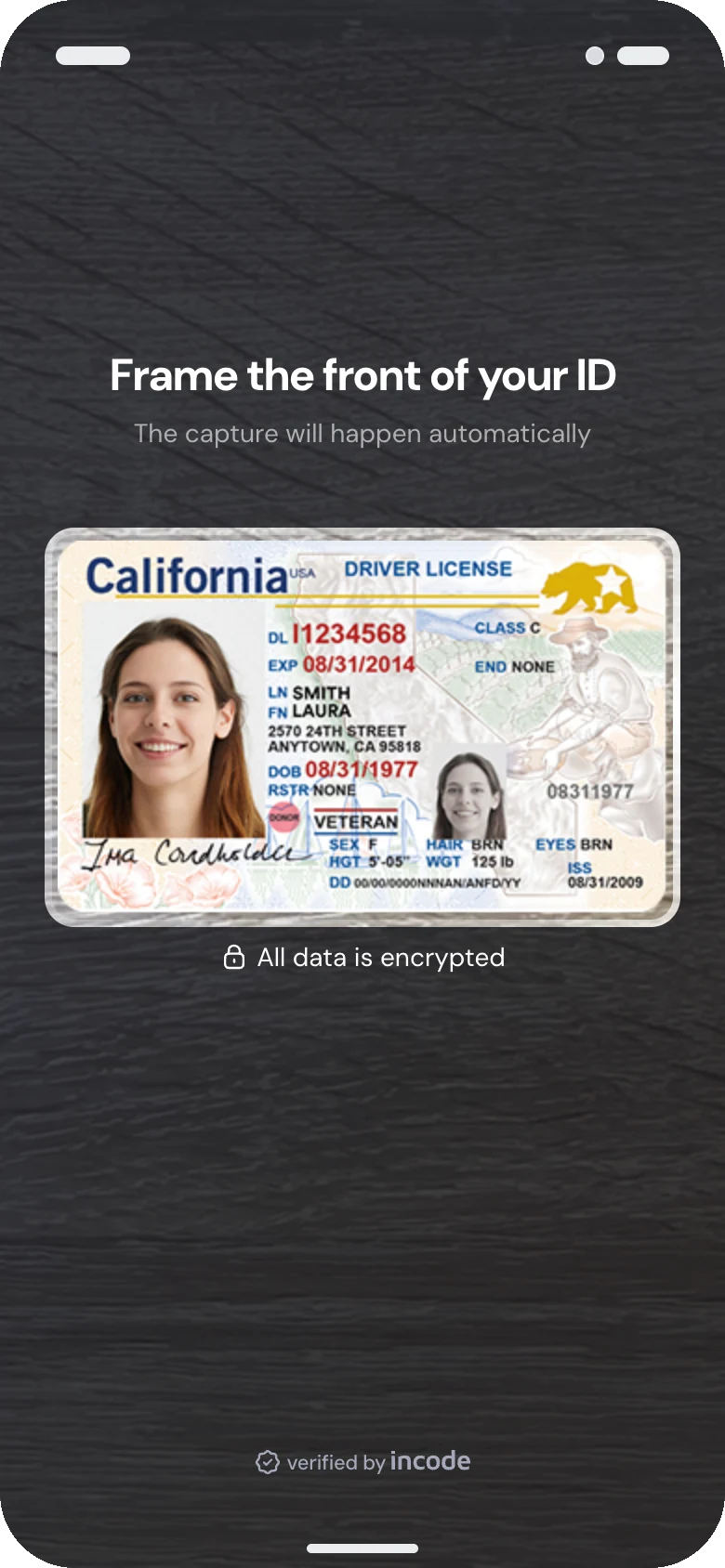
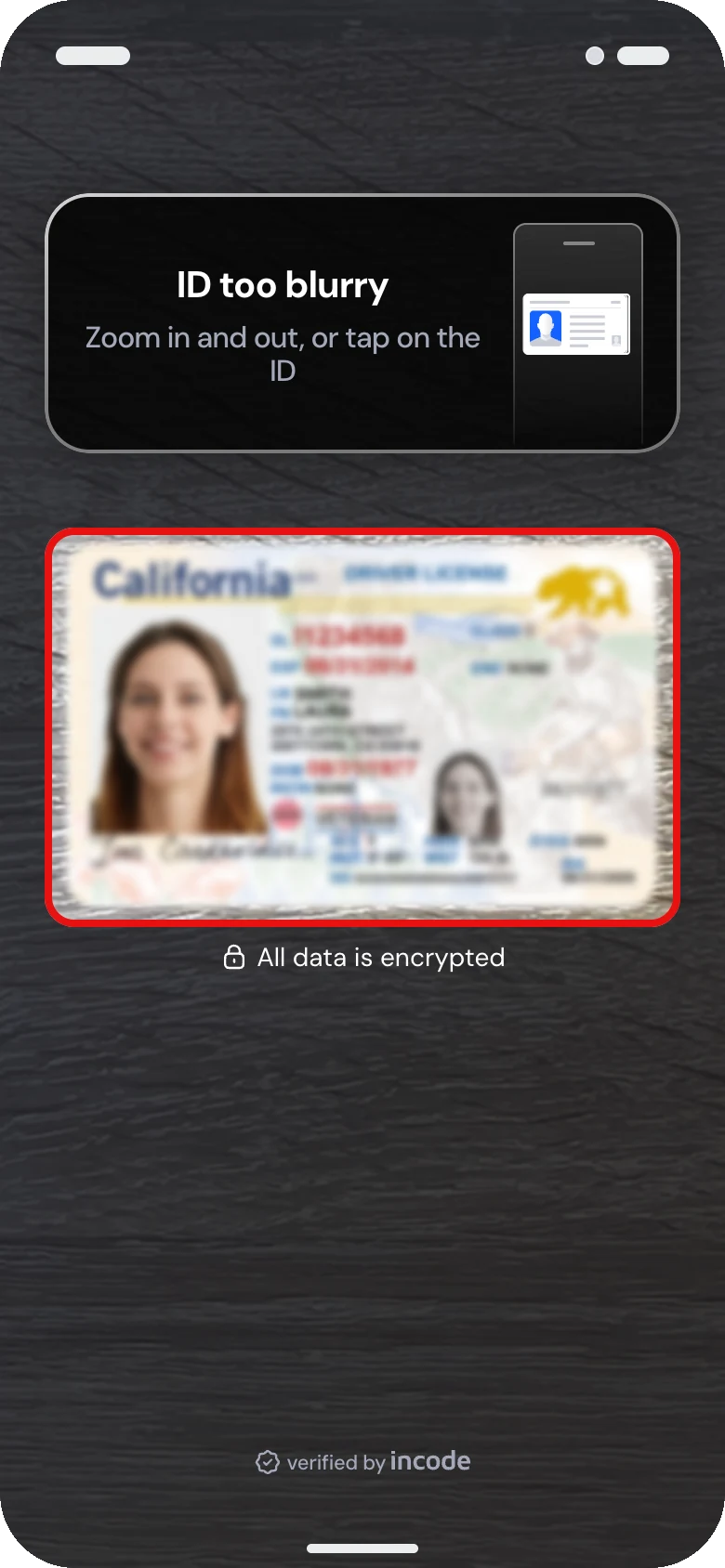
The cleaner the capture, the better the read. Incode's SDK gets every user to a readable frame on the first try, then extracts what's on it.
Live feedback fixes framing, glare, and focus before the shot, so the read starts clean.
Detects the ID, straightens even upside-down scans, and captures the instant it's readable.
Proprietary OCR reads every field, outperforming general-purpose engines on scripts and symbols.
Decodes PDF417 and the MRZ, then matches both against the printed fields.
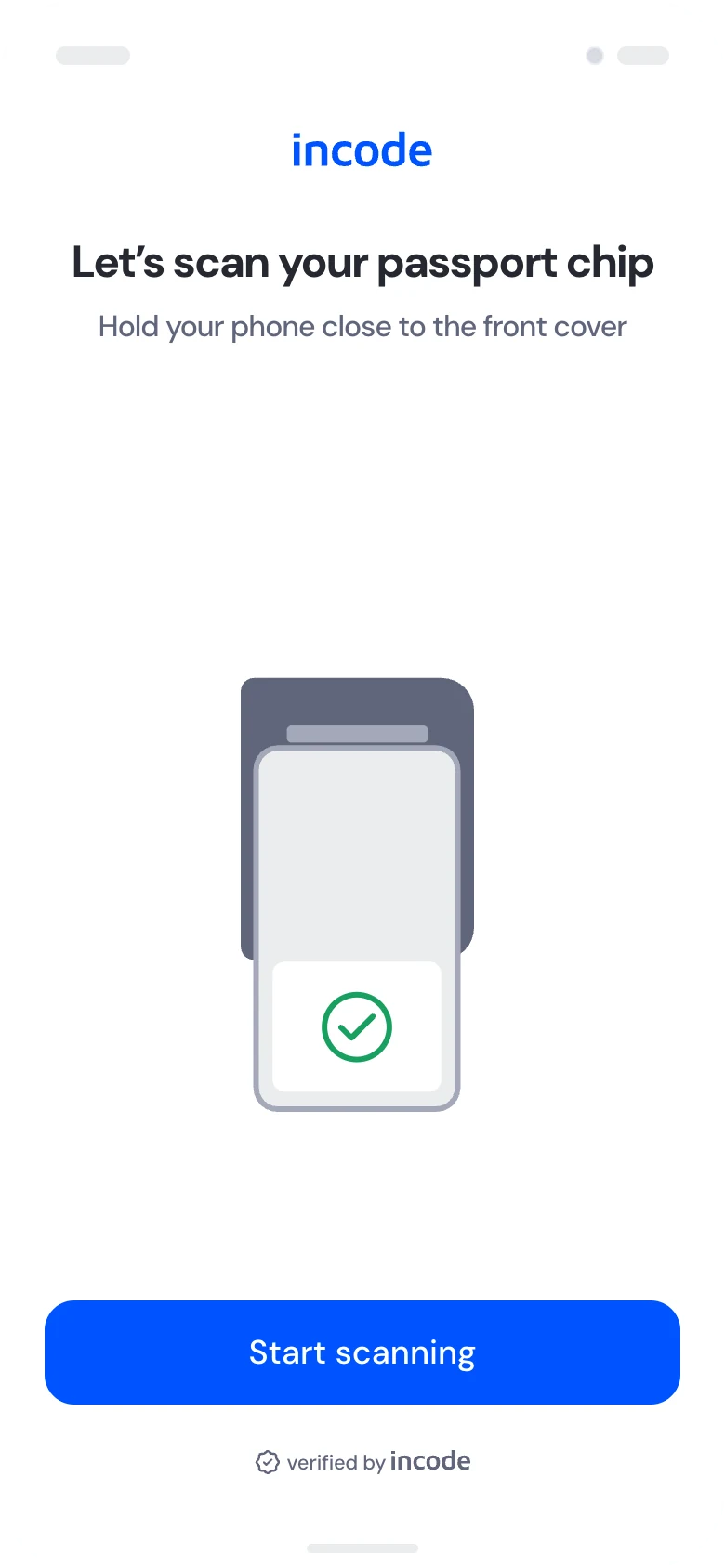
Reads the encrypted chip in e-passports and modern IDs for the highest data assurance.
Accuracy
Purpose-built beats general-purpose. In head-to-head testing on real IDs, Incode read the fields that off-the-shelf OCR missed.
Incode's OCR is trained on identity documents, not generic text, so it holds up on security fonts, dense address lines, and the machine-readable zone, where general engines drop fields or break the checksum entirely.
Field-level exact-match accuracy in internal benchmarks, Incode vs general-purpose OCR.
Global coverage
Tell Incode which documents to accept. The fonts, layouts, symbols, and scripts are learned and handled automatically.
document types
countries and territories
 Canada
United States
Mexico
Guatemala
Colombia
Ecuador
Peru
Brazil
Chile
Argentina
United Kingdom
Spain
France
Germany
Italy
Nigeria
Kenya
South Africa
India
Philippines
Indonesia
Japan
Australia
Canada
United States
Mexico
Guatemala
Colombia
Ecuador
Peru
Brazil
Chile
Argentina
United Kingdom
Spain
France
Germany
Italy
Nigeria
Kenya
South Africa
India
Philippines
Indonesia
Japan
Australia
Verified proof







4,900+
identity document types read, across 190+ countries.
8 of 10
top U.S. banks choose Incode
4 of 5
top banks in Latin America run on Incode
97%
MRZ and document-number exact-match accuracy
Optical character recognition (OCR) reads the text on an identity document, name, date of birth, document number, expiry, and the machine-readable zone, and returns it as structured data your systems can use.
Incode's purpose-built OCR outperforms open-source and general-purpose alternatives on global IDs, in internal benchmarks reading name fields at 92% accuracy versus 77% for general-purpose OCR, because it is trained on identity documents rather than generic text.
4,900+ document types across 190+ countries and territories, reading Latin and non-Latin scripts including Cyrillic, Arabic, and Asian characters: passports, national IDs, driver's licenses, and residence permits.
Yes. A dedicated reader decodes PDF417 barcodes and machine-readable zones, restores poor-quality captures with a machine-learning model, and cross-checks them against the printed fields to catch mismatches.
Yes. Incode develops its OCR in-house with no third-party engine in the pipeline, which is why new and redesigned document formats can be supported quickly, and why it can run in a fully air-gapped deployment.
What's next
See how Incode's in-house OCR reads the documents general tools miss.