Deepfakes and face swaps
Generative AI grafts a target's face onto video, defeating any check that only looks for a matching image.
 Highlights
 Introducing TrustGraph
The first trust network built for the agentic era
Read more
Introducing TrustGraph
The first trust network built for the agentic era
Read more
 Age Center
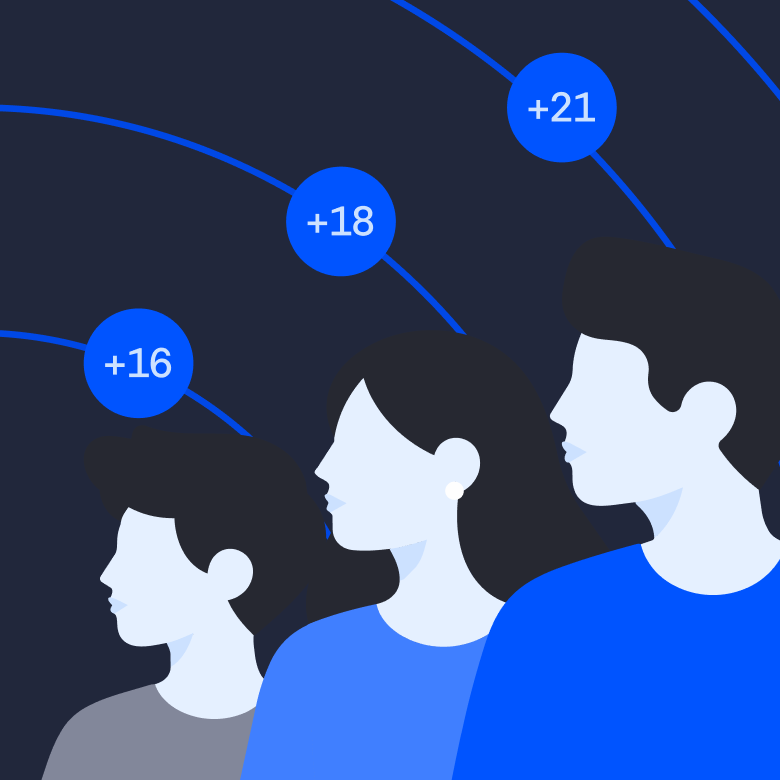
Understand Incode’s approach to age assurance
Explore the Center
Age Center
Understand Incode’s approach to age assurance
Explore the Center
 Introducing GovFaceMatch
The first identity solution to match biometrics against DMV records
Read more
Introducing GovFaceMatch
The first identity solution to match biometrics against DMV records
Read more
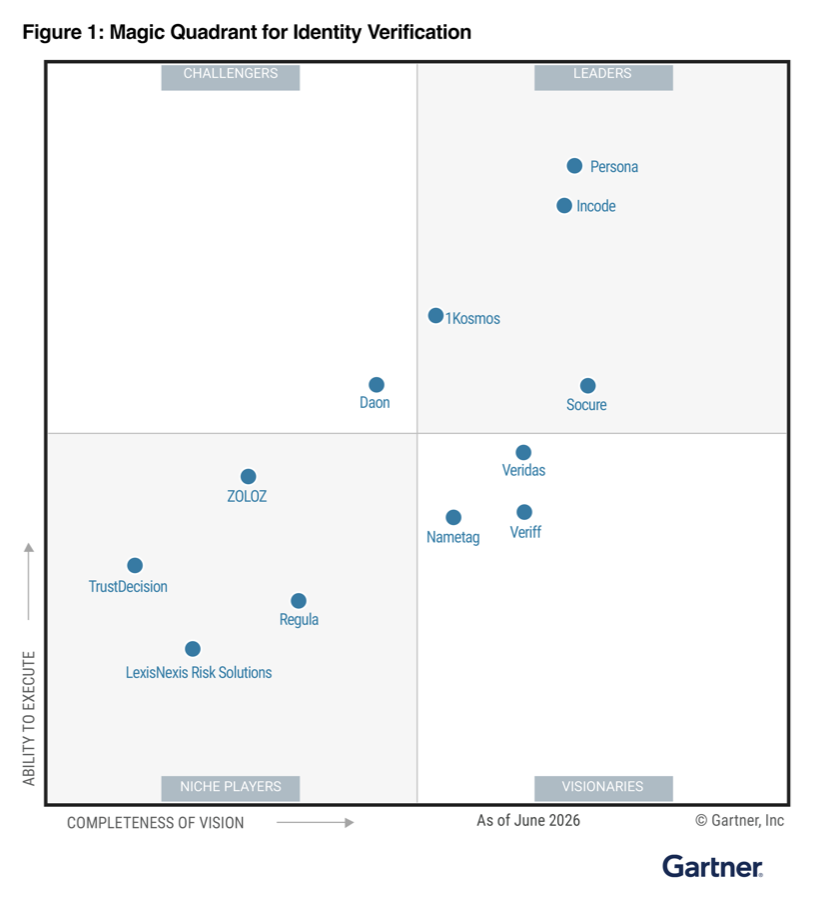
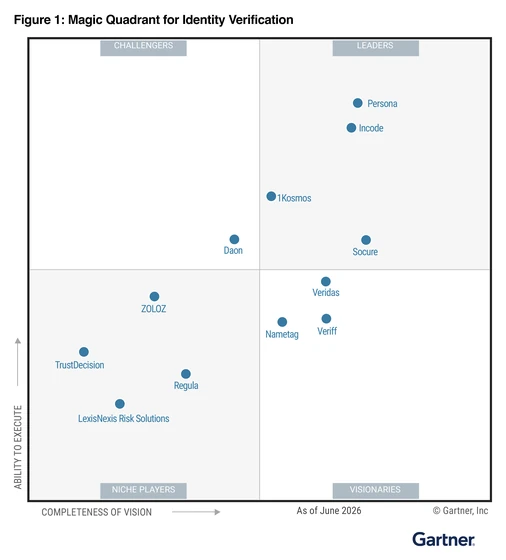 3 years in a row named a Leader
A Leader in the 2026 Gartner® Magic Quadrant™ for Identity Verification
Download the report
3 years in a row named a Leader
A Leader in the 2026 Gartner® Magic Quadrant™ for Identity Verification
Download the report
The threat
Generative AI makes a convincing fake in seconds, and most people can't tell. Face swaps, injected camera feeds, and presentation attacks all target the one moment that proves who's really there.
Generative AI grafts a target's face onto video, defeating any check that only looks for a matching image.
Fraudsters bypass the camera entirely, feeding a manipulated video straight into the verification stream.
Printed photos, screen replays, and 3D masks held up to the camera in place of a live person.
growth in fintech deepfake incidents in a single year
of people can't tell a real face from a deepfake
How it works
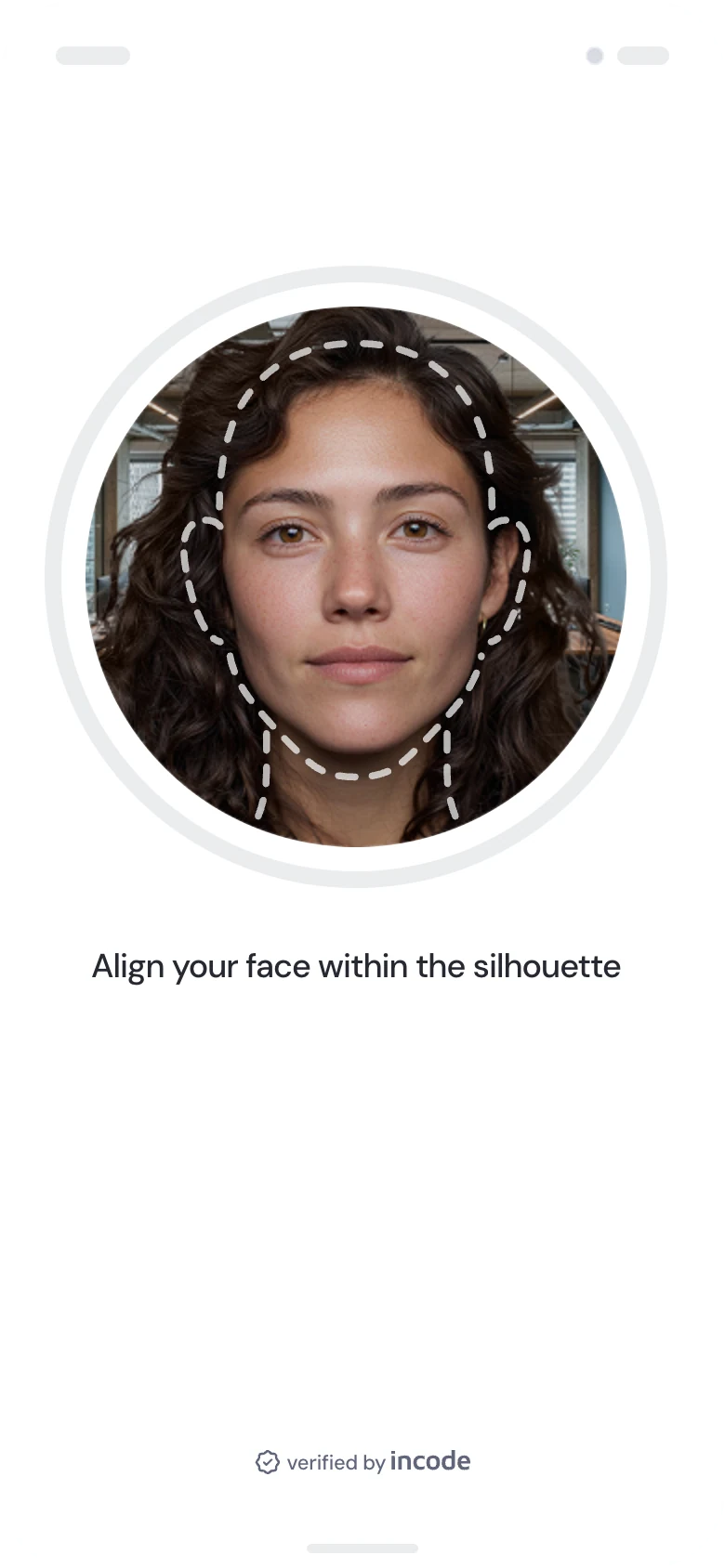
Every selfie runs the full pipeline in milliseconds: detected, encoded into a private signature, and matched to the real person behind it.
The technology
Pioneering models trained on globally diverse data hold high accuracy across ethnicity, age, gender, and environment, with liveness and deepfake defense built in.
In the dashboard
Behind the flow, each session returns one auditable face-recognition result: the onboarding selfie matched 1:1 against the ID photo, passive liveness and spoof checks, and a single status your team can act on.
NIST benchmark
Incode's models are independently tested by NIST, the global benchmark for face recognition, for both 1:1 verification and 1:N identification.
Evaluated against 158 developers and 527 algorithms on galleries of 1.6 million images, Incode's models are top-ranked in FRTE for both 1:1 verification and 1:N identification: NIST-certified, not self-reported.
among full-solution IDV providers · NIST FRTE 1:N identification (2024)
Verified proof







Top-ranked
by NIST in FRTE for 1:1 verification and 1:N identification.
8 of 10
top U.S. banks choose Incode
4 of 5
top LATAM banks run on Incode
1.6M
images in NIST's FRTE benchmark galleries
It confirms a person's identity by comparing the geometry of their face, as a live selfie or a photo, against a trusted reference, either a single image (1:1) or a database of faces (1:N).
1:1 verification checks whether two images are the same person: a selfie against an ID photo. 1:N identification searches a database to find whether a face already exists, catching duplicates and repeat fraud.
Incode's models are NIST-certified and ranked #1 among full-solution IDV providers in the FRTE 1:N benchmark, matching a face in about 20 milliseconds with a 0.01% false-match rate.
Passive liveness confirms a real, present person from video frames alone, while dedicated models detect face swaps, injected camera feeds, replays, and 3D masks. No user actions required. The stack is certified to iBeta ISO 30107-3 PAD Level 2.
Yes. Models are trained on globally diverse, compliant data and tested against NIST FRTE benchmarks that specifically evaluate demographic fairness, with consistent accuracy across ethnicity, age, and gender.
What's next
See how Incode's facial recognition performs on your own flows.