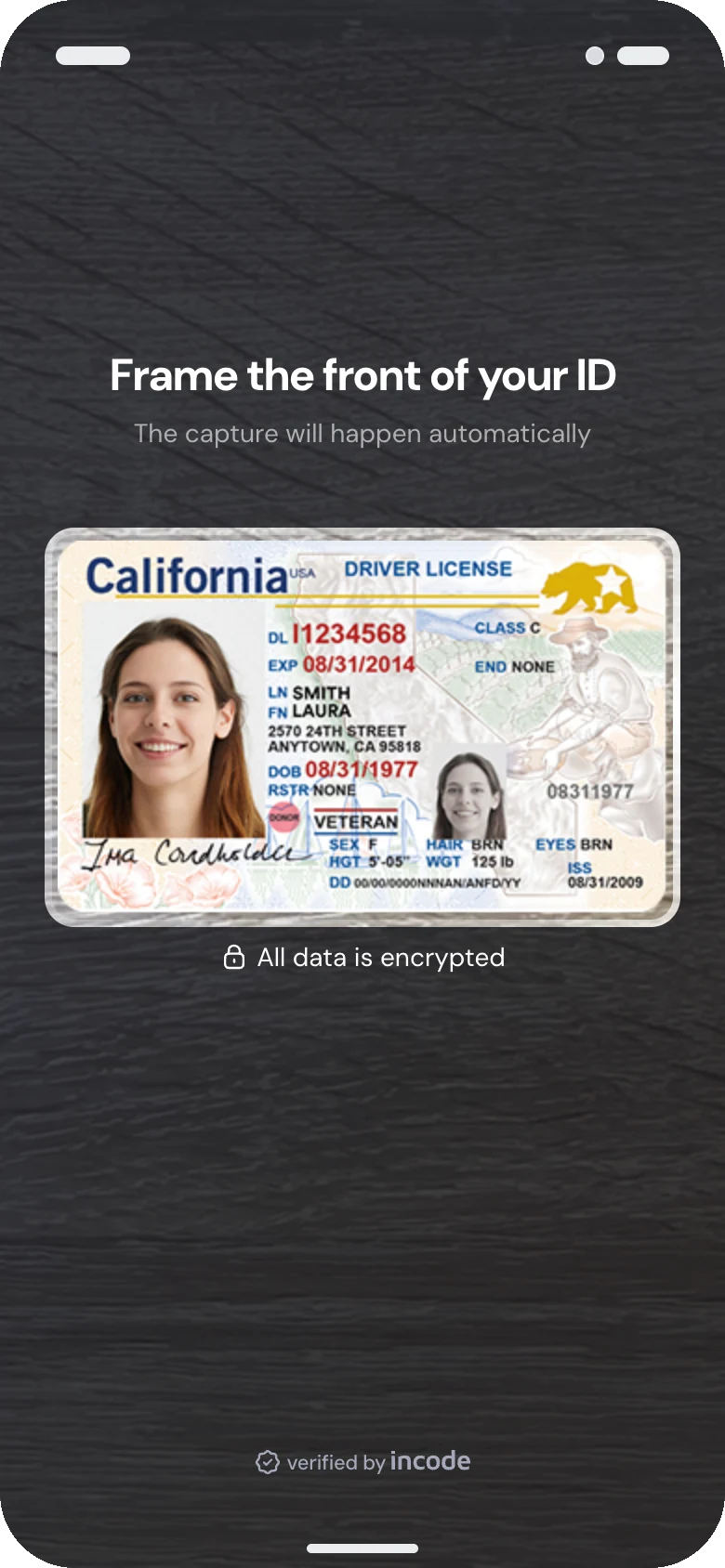
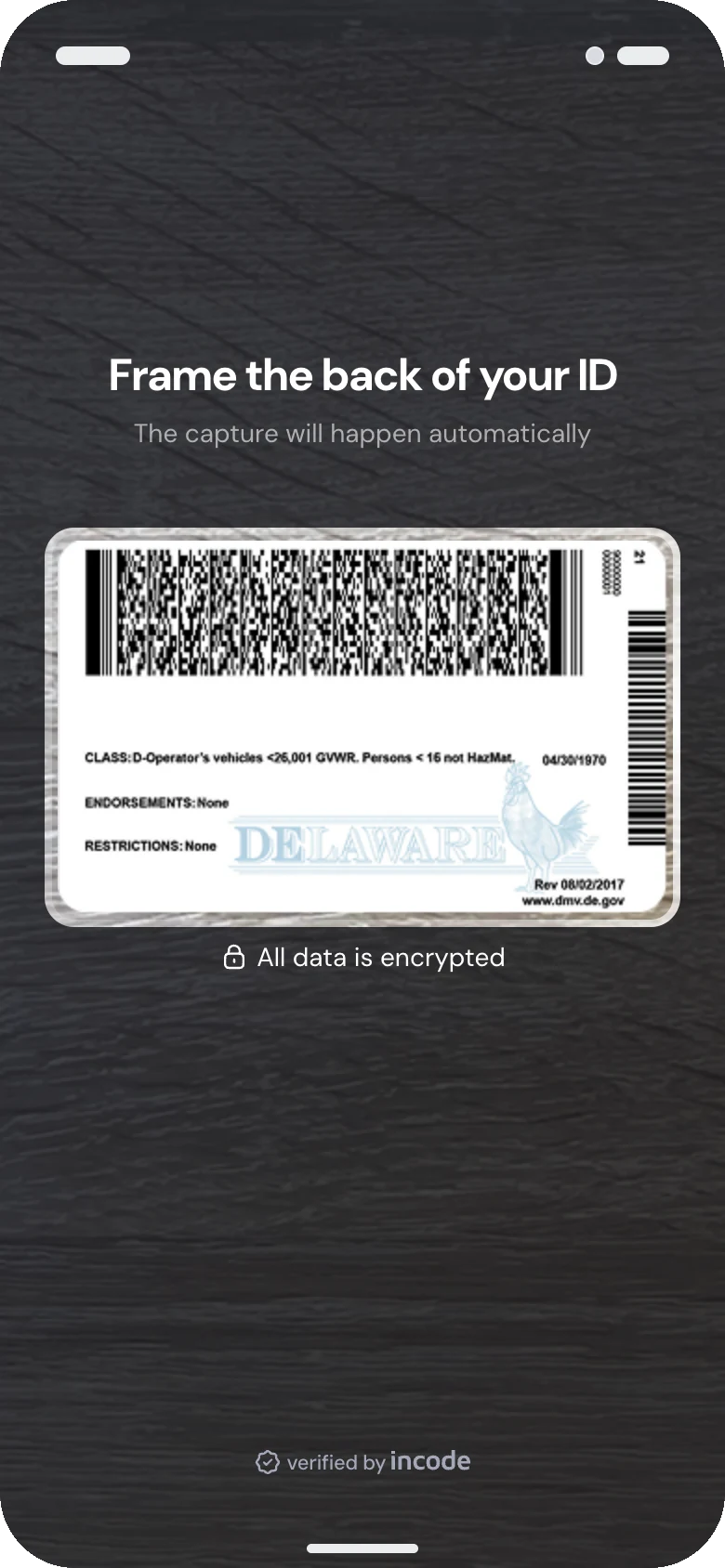
Paper forgery
Altered text, glued-in photos, and reprinted cards. The classic fake, and still everywhere.
 Highlights
 Introducing TrustGraph
The first trust network built for the agentic era
Read more
Introducing TrustGraph
The first trust network built for the agentic era
Read more
 Age Center
Understand Incode’s approach to age assurance
Explore the Center
Age Center
Understand Incode’s approach to age assurance
Explore the Center
 Introducing GovFaceMatch
The first identity solution to match biometrics against DMV records
Read more
Introducing GovFaceMatch
The first identity solution to match biometrics against DMV records
Read more
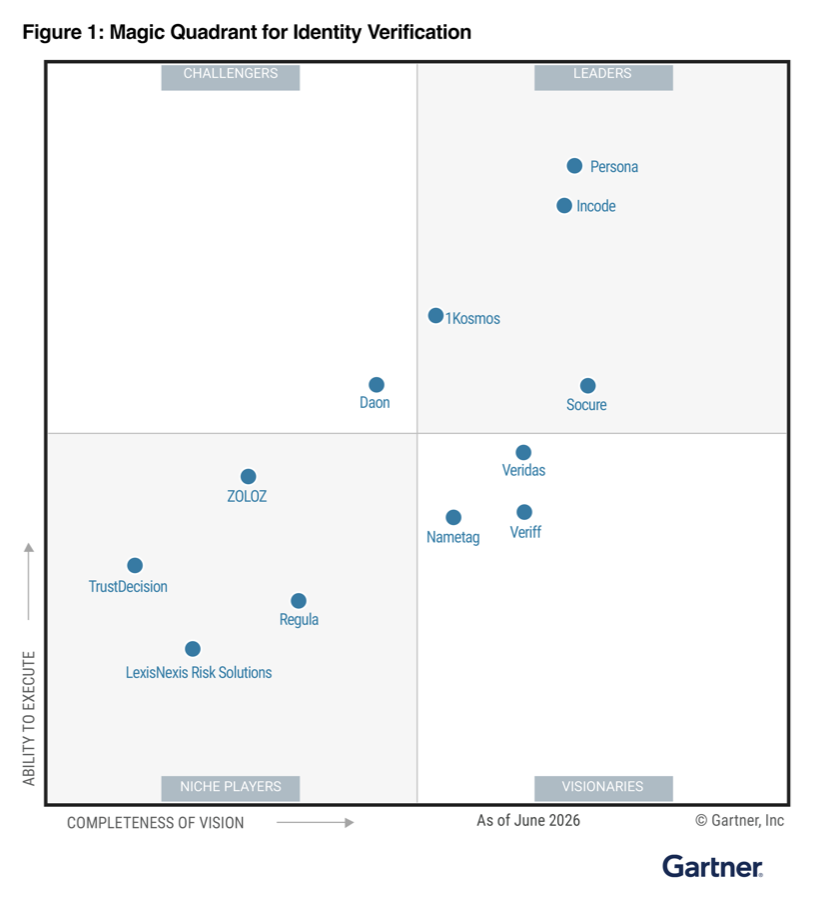
 3 years in a row named a Leader
A Leader in the 2026 Gartner® Magic Quadrant™ for Identity Verification
Download the report
3 years in a row named a Leader
A Leader in the 2026 Gartner® Magic Quadrant™ for Identity Verification
Download the report
The threat
Fakes moved from the copy shop to the cloud. Paper forgeries became screen replays, and now generative AI mass-produces synthetic IDs that look flawless to the human eye.
Altered text, glued-in photos, and reprinted cards. The classic fake, and still everywhere.
A genuine ID replayed from a phone or monitor, complete with staged reflections and glare.
A document fabricated from scratch by generative AI: correct fonts, plausible layout, no original.
growth in AI-generated document fraud over two years
share of identity fraud that is AI-assisted, this year
How it works
Every document flows through the full battery in seconds: read, authenticated, and proven to belong to a real, present person.
Smart capture
The capture experience decides whether people finish. Each experience below is tuned to get every user to a clean result on the first try.
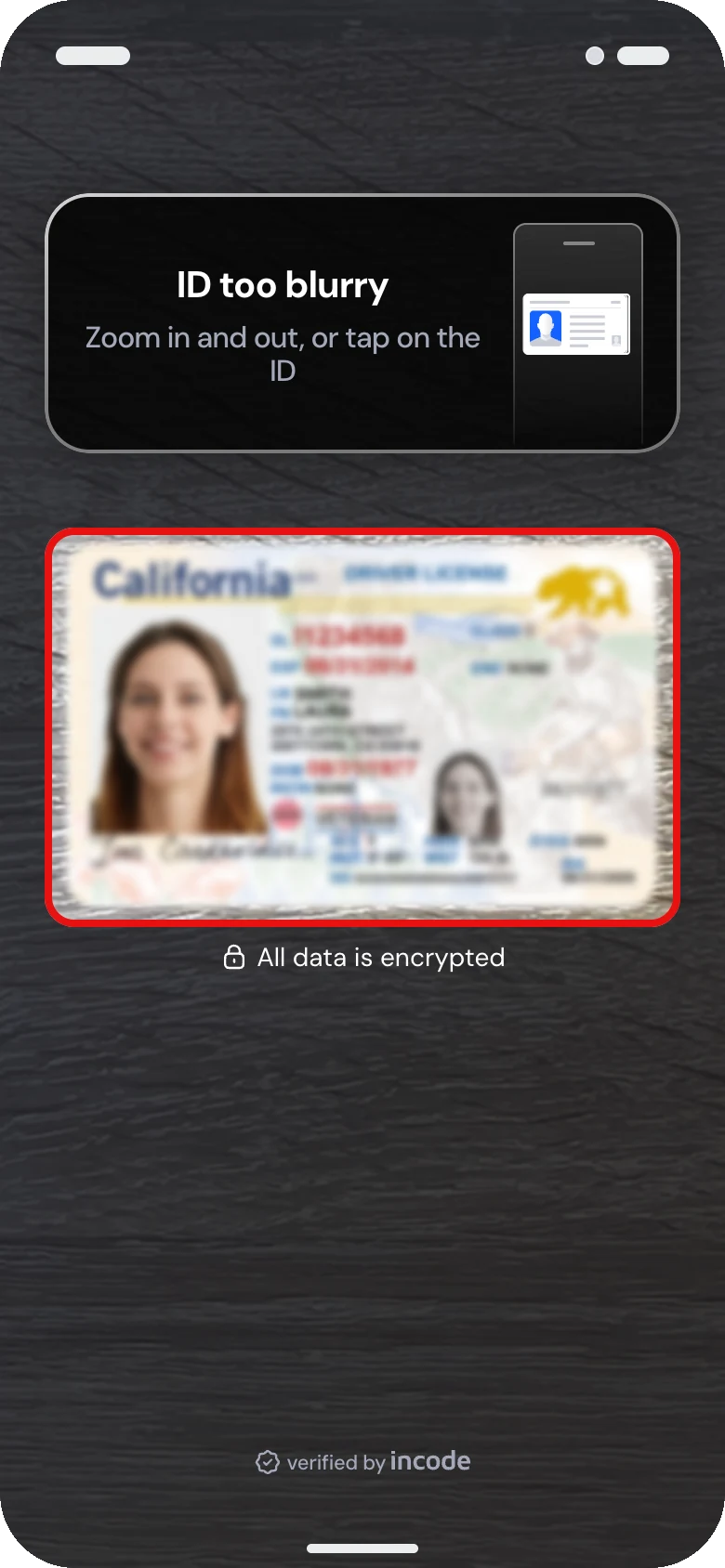
Live guidance corrects framing, glare, and focus before the shot is ever taken, so users never get stuck.
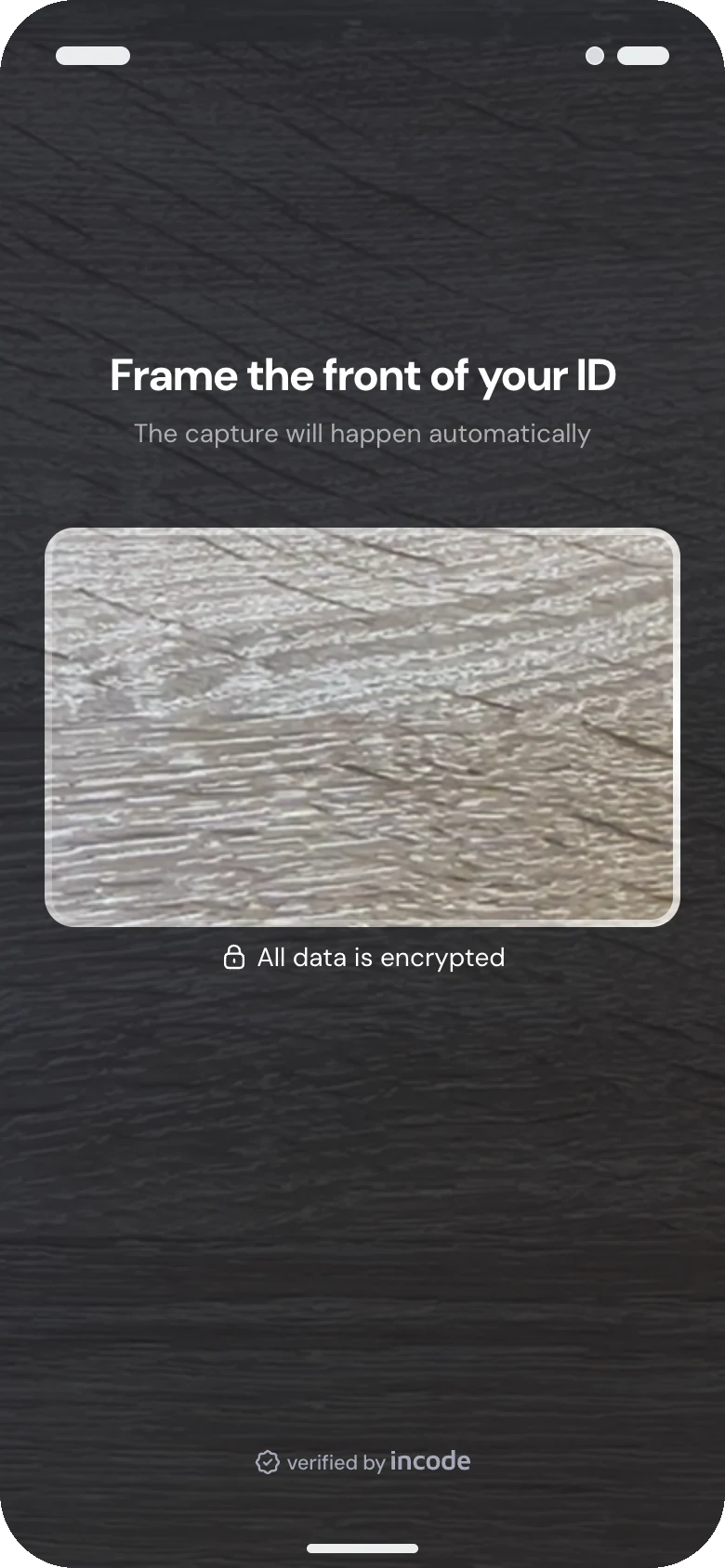
Incode auto-detects the document and fires the shutter the instant the frame is readable, on any camera.
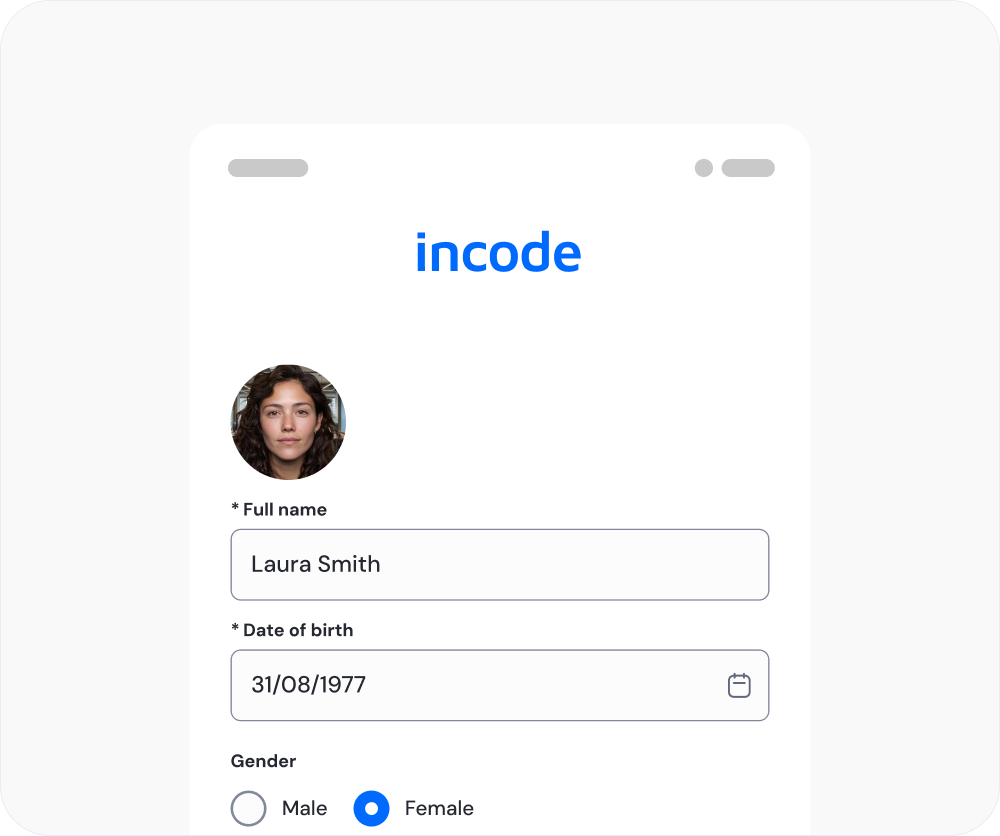
Proprietary OCR reads every field on the ID, and does so 25% more accurately than open-source engines.
Decodes PDF417 barcodes and machine-readable zones, then checks them against the printed data.
Reads the encrypted chip inside e-passports and modern IDs for the highest level of assurance available.
Deepsight for Documents
Generative AI doesn't just fake faces, it fabricates documents. Deepsight for Documents guards the document layer itself.
It flags the forged IDs and passports that traditional tools miss, spotting the artifacts invisible to the human eye. AI-assisted fraud is climbing from a quarter of all attempts toward half this year, and it hits the document layer first.
more document fraud caught than a document check alone
Global coverage
Tell Incode which documents to accept. The odd fonts, country-specific layouts, and security features are all handled automatically.

 Canada
 United States
 Mexico
 Guatemala
 Colombia
 Ecuador
 Peru
Peru
 Brazil
 Chile
Chile
 Argentina
 United Kingdom
 Spain
Spain
 France
 Germany
 Italy
Italy
 Nigeria
 Kenya
Kenya
 South Africa
 India
India
 Philippines
 Indonesia
 Japan
Japan
 Australia
Verified proof







99.65%
of synthetic document fraud caught.
4,600+
document types verified
200+
countries and territories covered
35+
ML models run on every check
It is the automated process of confirming that an identity document, a passport, driver's license, or national ID, is genuine, unaltered, and belongs to the person presenting it.
OCR extracts the data fields, machine-learning models detect forgery signals (font inconsistencies, tampering, security-feature anomalies), and the extracted identity is cross-checked against the person's live biometric match, all in one pass.
4,600+ document types from 190+ countries, passports, national IDs, driver's licenses, residence permits, and visas, each verified against its official format, with AI-powered capture guidance to reduce user errors.
Verification confirms a document is authentic and belongs to the user. Fraud detection specifically identifies manipulation: altered text, printed overlays, injected images, replayed holograms. Incode does both simultaneously.
Synthetic fraud mixes real and fabricated data with altered or manufactured documents. Incode detects micro-level forgery signals invisible to the human eye, blocking synthetic IDs at the point of onboarding.
What's next
See how 35+ ML models stop document fraud before it reaches your business.