

Identity graph
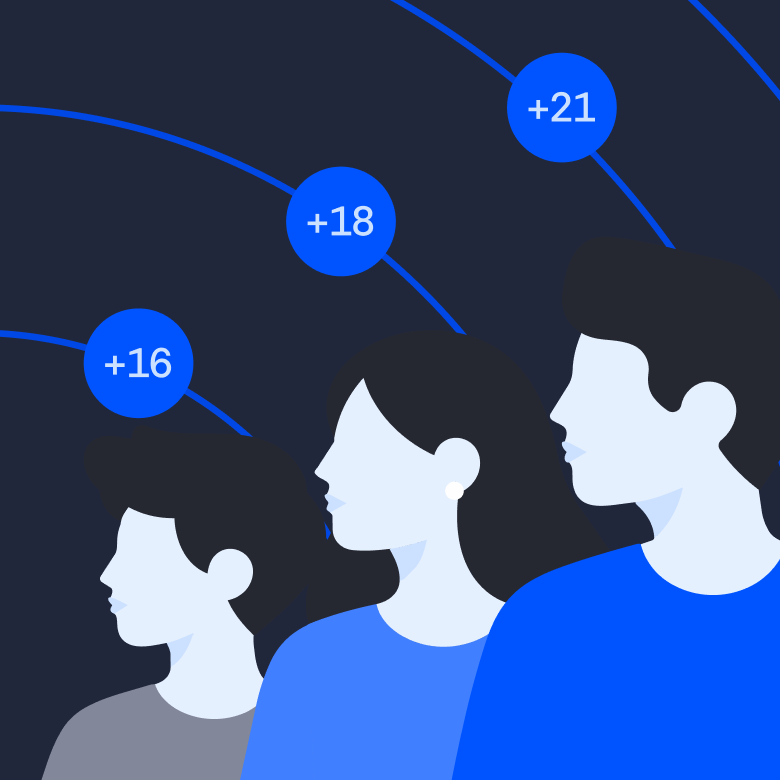
A fraud-detection tool that flags unusual clusters, like one device logging into 10 different accounts.
It works like a map of connections. Each account, device, phone number, and address is a point, and shared details draw lines between them, so a group of supposedly unrelated accounts that all link to one device stands out.
A graph database, which stores information as points (nodes) and the links (edges) between them, where each identity attribute, device, or account is a node. A shared connection, for instance a device reused across accounts or a phone number reused on multiple applications, becomes an edge between two nodes. Unusually dense clusters of these edges expose a coordinated fraud ring that looks clean from any single account.
An identity graph typically works in three steps:
- The system records attributes from each application or session, such as names, emails, phone numbers, addresses, devices, and IP addresses.
- It links any two records that share an attribute.
- It analyzes the links for clusters, unusual density, and connections to known fraud.
The graph helps catch several patterns:
- Fraud rings, where a coordinated group runs the same attack across many accounts.
- Synthetic identities, which often reuse real attributes across several invented people.
- Duplicate applicants, where one person opens multiple accounts under different names.
An identity graph sits next to terms that are easy to mix up:
- Fraud ring is the group of linked fraudulent identities that the graph helps reveal.
- Duplicate detection matches a new applicant against existing records, which the graph can support.
- Device fingerprinting produces one of the identifiers that feeds the graph.
- Term
- Identity graph
- Abbreviation
- None
- Category
- Verification
- Slug
identity-graph